

Key Takeaways
- Hospital elevators must accommodate stretchers and medical equipment, ensuring safe and efficient patient transport.
- Choosing an Automatic Hospital Elevator in Gujarat requires considering safety, accessibility, and performance needs for healthcare facilities.
- Proper planning and customization can enhance the functionality of hospital elevators to meet unique operational demands.
- Reliable hospital elevators are essential for connecting key departments and minimizing delays in patient care and staff movement.
- Automatic Hospital Elevators must prioritize spacious cabins to accommodate patients, staff, and medical equipment effectively.
Healthcare facilities are designed to provide timely medical care, patient comfort, and smooth movement across multiple departments. Every part of a hospital contributes to efficient operations, and one of the most important systems is the hospital elevator. From transporting patients and medical staff to moving equipment and emergency supplies, hospital elevators support daily healthcare activities in a safe and organized manner.
Unlike standard passenger elevators, hospital elevators are built to meet the specific needs of healthcare environments. They are designed with spacious cabins, smooth operation, reliable performance, and accessibility features that accommodate patients, wheelchairs, stretchers, and medical equipment. Choosing the right hospital elevator requires careful evaluation of building requirements, traffic flow, safety expectations, and long-term performance.
When selecting an Automatic Hospital Elevator, healthcare administrators should focus on functionality, durability, hygiene, and passenger comfort. Every healthcare building has unique operational demands, making it essential to choose an elevator solution that complements the facility's design and day-to-day activities. At Sigma Elevators, we understand that hospitals require dependable vertical transportation systems that support efficient patient movement while maintaining high standards of quality and reliability.
Why Hospital Elevators Are Essential
Hospitals run around the clock, connecting emergency departments, operating theatres, intensive care units, laboratories, wards, pharmacies, and diagnostic centers through a single vertical transport system. When this system is slow or poorly designed, patient transport gets delayed and daily workflow suffers.
A well-planned Automatic Hospital Elevator keeps movement between departments smooth, supporting both patient care and staff efficiency. Modern healthcare buildings also need lifts that can carry large medical equipment, hospital beds, and multiple caregivers at once, which sets hospital elevators apart from ordinary passenger lifts.
Key Requirements for Hospital Elevators
Selecting a hospital elevator involves far more than picking a cabin finish. Healthcare buildings need specific engineering choices that support safety, accessibility, hygiene, and dependable daily performance.
Spacious Cabin Design
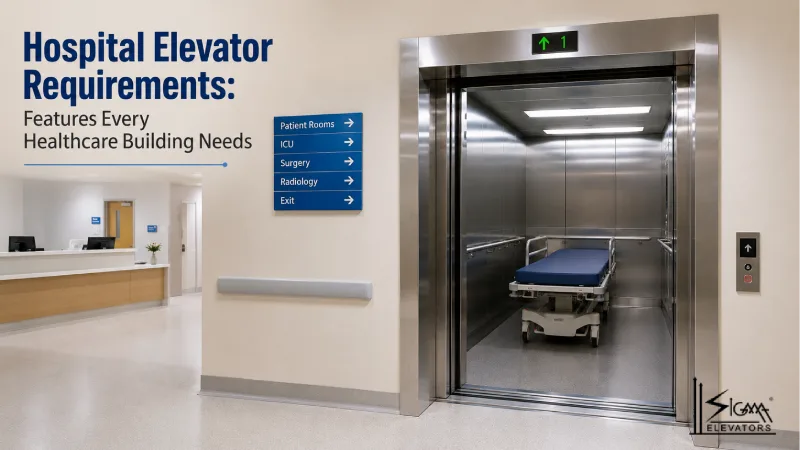
A hospital lift must have enough room for a stretcher, wheelchair, or bed along with the attendants accompanying the patient. Sigma Elevators builds its hospital cabins deep and wide enough for caregivers to stay beside the patient throughout the ride, even when medical devices travel along with them.
Smooth and Stable Operation
Patients recovering from surgery or in critical condition need a gentle ride. A dependable Automatic Hospital Elevator offers smooth acceleration and deceleration, cutting down on unnecessary movement and making the journey between floors far more comfortable.
Wide Door Openings
Wide automatic doors make it easier to move stretchers, wheelchairs, and bulky equipment in and out without delay. This width also speeds up patient movement during emergencies and keeps busy hospital corridors from getting congested near the lift entrance.
Safety Features Every Healthcare Building Needs
Safety sits at the center of hospital elevator design. A dependable system supports both patients and medical staff throughout routine use and emergencies alike. Important safety elements include:
- Emergency alarm systems
- Backup power support
- Automatic rescue operation during power failure
- Door protection sensors
- Emergency communication systems
- Non-slip flooring
- Easy-to-reach control panels
Accessibility for Every User
Hospitals welcome people of every age and physical ability, so elevator accessibility shapes the entire patient and visitor experience. Sigma Elevators designs hospital lifts with:
- Wheelchair-friendly entrances
- Braille buttons
- Audible floor announcements
- Clear digital floor indicators
- Conveniently placed control panels
These details make the ride comfortable for patients, visitors, and healthcare staff alike, without adding complexity to daily use.
Hygiene and Clean Interior Surfaces
Cleanliness matters in every corner of a hospital, including the elevator cabin. Sigma builds hospital lift interiors with corrosion-free, easy-to-wash surfaces that hold up to repeated cleaning and fumigation. Touch-friendly controls and durable wall panels support hygiene practices throughout the facility. Hospital administrators researching an Automatic Hospital Elevator in Gujarat often weigh hygiene standards and long-term durability just as heavily as price when comparing manufacturers.
Reliable Performance During Continuous Operation
Unlike office or residential buildings, hospitals operate every hour of every day, and their elevators face constant use. Reliability becomes critical during emergencies, when quick transport between departments can genuinely affect patient outcomes. Sigma Elevators engineers its hospital lifts for dependable performance under this kind of continuous load, supporting uninterrupted movement for patients, doctors, nursing staff, and equipment around the clock.
Capacity and Load Considerations
Choosing the right hospital elevator starts with understanding expected traffic. Factors that shape capacity include:
- Number of hospital floors
- Patient volume
- Size of medical equipment
- Bed transportation needs
- Staff movement
- Visitor traffic
Healthcare organizations evaluating an Automatic Hospital Elevator in Gujarat should look at both current operational needs and future expansion plans before finalizing capacity.
Advanced Features That Improve Performance
Technology has made hospital elevators smarter and more dependable. A well-built Automatic Hospital Elevator typically includes:
- Automatic door operation for smooth entry and exit
- Soft start and soft stop technology for patient comfort
- Energy-efficient operation
- Digital floor display with clear visibility
- Emergency communication systems
- Automatic rescue operation during power interruptions
- Durable control panels built for frequent use
Sigma Elevators combines these features into a single dependable system built for everyday hospital demands.
Importance of Speed and Travel Efficiency
Fast movement matters during emergencies, but speed always needs to be balanced against passenger comfort. Smooth travel keeps patients comfortable while helping doctors and nursing staff move quickly between departments. Sigma Elevators offers hospital lift speeds ranging from 0.25 to 2.00 meters per second, letting healthcare facilities choose the right balance of speed and comfort based on building height and traffic patterns.
Energy Efficiency for Modern Healthcare Buildings
Since hospitals run continuously all year, energy efficiency plays a real role in operating costs. Modern hospital elevators are built to optimize power consumption without compromising dependable performance, which helps healthcare facilities lower long-term running costs while staying aligned with sustainable building practices.
Interior Design and Passenger Comfort
A hospital elevator cabin should feel calm rather than clinical. Important interior touches include:
- Bright yet comfortable lighting
- Spacious cabin layout
- Easy-to-clean wall panels
- Slip-resistant flooring
- Quiet operation
- Simple control panels
- Clear floor indicators
A thoughtfully designed cabin supports patient comfort while giving the healthcare facility a more professional, welcoming feel.
Compliance with Building Requirements
Hospital elevators need to be installed according to applicable building codes and project specifications. Before installation, planners should account for:
- Building layout
- Available shaft space
- Number of stops
- Expected passenger traffic
- Accessibility requirements
- Equipment transportation needs
Proper planning at this stage helps the elevator fit smoothly into the hospital's overall infrastructure.
Maintenance for Long-Term Performance
Routine maintenance keeps a hospital elevator performing reliably year after year. Regular inspections catch wear on components before they affect daily operation. Typical maintenance activities include:
- Inspection of mechanical components
- Door operation checks
- Safety device testing
- Control panel inspection
- Cleaning of elevator systems
- Performance evaluation
A scheduled maintenance program supports steady operation even in the busiest healthcare environments.
Common Mistakes to Avoid When Selecting a Hospital Elevator
Choosing a hospital elevator without proper planning can create problems later.
Selecting Based Only on Cost — a lower price tag can overlook long-term durability and maintenance needs.
Ignoring Future Expansion — hospitals grow over time, and planning for added patient volume helps the elevator keep pace with future departments.
Overlooking Accessibility — the lift should comfortably fit wheelchairs, stretchers, and mobility aids while staying simple for visitors and staff to operate.
Choosing Inexperienced Suppliers — working with an established manufacturer brings more confidence through design, installation, and maintenance. Organizations searching for an Automatic Hospital Elevator in Gujarat should weigh product quality, technical expertise, and long-term service support before deciding.
Customization Options for Healthcare Facilities
Every hospital has its own operational needs, and hospital elevators can often be customized to match the building's design. Common customization options include:
- Cabin finishes
- Door styles
- Control panel designs
- Lighting configurations
- Flooring materials
- Capacity options
- Interior dimensions
These choices let hospitals build elevators that fit their architectural style while supporting daily operations.
Planning Hospital Elevator Installation
Successful installation starts at the planning stage of a healthcare project. Architects, engineers, and elevator specialists need to work together to evaluate:
- Structural requirements
- Elevator location
- Patient flow
- Department connectivity
- Emergency access
- Future operational needs
Early planning simplifies the entire installation process and supports efficient movement throughout the building once the hospital is operational.
Why Choose Us
Sigma Elevators has been manufacturing, installing, and modernizing elevators since 1985, giving the company decades of hands-on experience with exactly the kind of specialized requirements hospitals bring, from stretcher-friendly cabins and precise leveling to hygienic interiors and battery-backed emergency landing. As a Gujarat-based manufacturer, Sigma Elevators understands local building codes and healthcare infrastructure needs, offering a genuine Automatic Hospital Elevator in Gujarat solution rather than a generic passenger lift adapted for hospital use. Choosing Sigma Elevators means working with a team that treats hospital elevator planning as part of patient care itself, backed by ongoing maintenance and modernization support long after installation.
Conclusion
Hospital elevators carry a level of responsibility no other lift in a building has to bear, moving patients, staff, and critical equipment safely, floor after floor, day and night. Features like spacious cabins, precise leveling, strong safety systems, and hygienic interiors are basic requirements, not optional extras. Sigma Elevators builds every Automatic Hospital Elevator around these real healthcare demands, and hospitals across the state increasingly turn to an Automatic Hospital Elevator in Gujarat built specifically for local building needs, giving administrators, staff, and patients lasting confidence in their vertical transport system.
Want to know more about hospital elevator requirements or get a custom quote for your healthcare facility? Call Sigma Elevators at +91 7383018998 or email sales@sigmaelevators.in
Frequently Asked Questions
What are the key features of an Automatic Hospital Elevator?
An Automatic Hospital Elevator is designed with spacious cabins to accommodate stretchers and wheelchairs, smooth and stable operation for patient comfort, wide door openings for easy access, and essential safety features like emergency alarms and backup power support.
Why is a hospital elevator different from a standard passenger lift?
Hospital elevators are built specifically to meet the unique demands of healthcare environments, including accommodating medical equipment, larger capacity for patients and staff, and features that support efficient and safe transport during emergencies.
What safety features should be included in hospital elevators?
Key safety features for hospital elevators include emergency alarm systems, automatic rescue operations during power failures, door protection sensors, and non-slip flooring to ensure safe transport for patients and staff.
How do I choose the right Automatic Hospital Elevator in Gujarat?
When selecting an Automatic Hospital Elevator in Gujarat, consider factors such as building layout, expected traffic flow, safety features, and future expansion needs. It's crucial to work with experienced manufacturers like Sigma Elevators to ensure the elevator meets local codes and operational requirements.
What maintenance is required for hospital elevators?
Routine maintenance for hospital elevators includes regular inspections of mechanical components, safety device testing, cleaning systems, and evaluating performance to prevent downtime and ensure reliable operation in busy healthcare settings.